


"Over the Rainbow" Full Song Playthrough
Welcome to our 3rd lesson in our beginner exploration of "Over the Rainbow." In this session, we’ll consolidate everything covered so far and play through the entire tune from start to finish.
This lesson is designed to reinforce your understanding of the song’s structure, introduce more dynamic expression techniques, and provide tips for creating a personalized interpretation of this jazz standard.
Breaking Down the Song Structure
"Over the Rainbow" is composed of 24 bars divided into three sections: two identical A sections and a contrasting B section, followed by a final A section. The A sections primarily consist of familiar 2-5-1 and 3-6-2-5-1 progressions, while the B section introduces a slightly different melody but maintains a similar harmonic foundation. Understanding the repetition and subtle variations in these sections is key to mastering the tune.
Dynamic Expression & Pedal Techniques
We emphasize the importance of dynamics in creating an engaging performance. By experimenting with different volumes, pedal techniques, and rhythmic flexibility, you can bring a unique touch to your rendition of "Over the Rainbow." For instance, try toggling the notes within chords to add movement and contrasting loud and fast playing with slow and soft playing to create a more dynamic and emotive performance.
Advanced Voicing and Melody Decoration
We also explore melodic embellishments such as rolling notes, doubling the melody, and adding grace notes and turns. These techniques can elevate a simple melodic passage of music into something more complex and expressive.
Listen to various recordings of "Over the Rainbow" on YouTube or Spotify to hear how different pianists interpret the melody, and then try to emulate these embellishments to make the piece truly your own.
Related Lessons
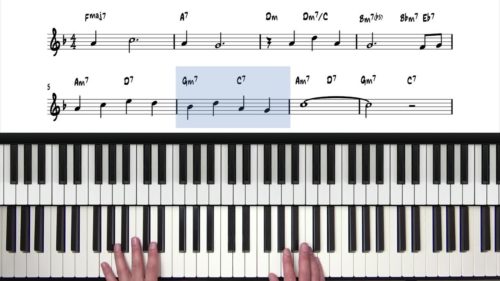
We take each bar of the A Section and apply licks, fills, and melodic ornamentation that we can use to create a soulf...
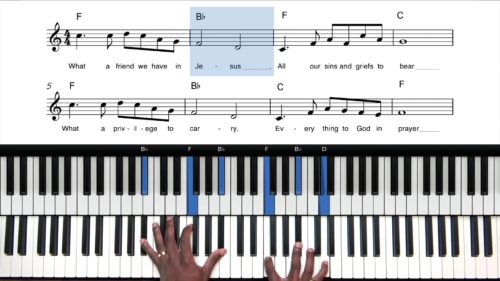
In this lesson we will explore some useful devices to add soulful melodic decoration including grace notes, space fil...
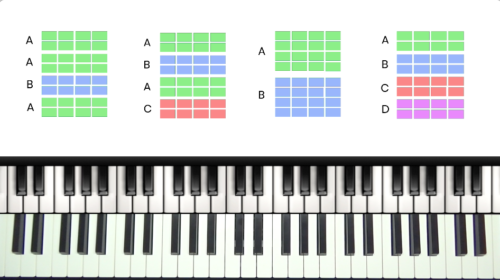
Lead sheets are a useful tool when starting out with jazz, but by learning tunes by memory, it will benefit your play...
Practice Tips
-
Experiment with Dynamics: Use crescendos and decrescendos to add emotional depth. Vary the volume to highlight different parts of the melody.
-
Incorporate Embellishments: Add turns, grace notes, and other embellishments to the melody. These subtle decorations can make your performance stand out.
- Personalize Your Interpretation: Don't be afraid to make the melody your own. Listen to different versions of "Over the Rainbow" for inspiration, and then create your unique interpretation.


Adding the G triad run in the next to last measure (Bb7) was interesting. What made you think of that? Is there some sort of logic or theory behind it?
Hi Gilbert,
Great question!
This is an upper structure triad voicing.
As you correctly point out, I play a Bb7 chord in the left hand and a G major triad in the right hand. We can also look at this as a major triad built from the 6th degree of the dominant chord. If you count up the Bb7 scale (essentially the Bb major scale with a flattened 7th degree) then G is the 6th degree of the scale. We simply build a major triad from here and it creates a beautiful “upper structure triad voicing”.
I hosted a 4 seminars on Upper Structure Triad Theory in January this year, you can find them all in this forum thread:
https://community.pianogroove.com/t/january-2025-upper-structure-triads/12629
I recommend to watch them in the order that they are listed in the thread and it will teach you all of the theory and how to apply these voicings to your music.
In this example, I arpeggiate the G triad up the piano – we explore upper structure triad arpeggio runs in the 3rd seminar listed in the forum thread above.
Please check out the seminars above and I think you will find this topic fascinating.
Happy to help further if you have more questions.
Cheers,
Hayden
I like the way you use dynamics and roll the chords. I’m having some issues putting that into my fingers. Do you have some exercises or courses that highlight those movements? I’m about 80% there since I do understand chord structures as well as extensions etc. Putting the knowledge into the keys is a different story.
Hi Ron,
I created a lesson on stretching 10th intervals here: https://www.pianogroove.com/blues-piano-lessons/slow-blues-voicings-with-10ths/
This lesson is focused on the slow blues style and I explain the correct way to practice stretching these wider intervals including a few drills and exercises.
I use this left hand technique extensively when playing jazz ballads, not just blues, and so the tips and guidance I share in this lesson are equally applicable to jazz piano performance.
—–
For this song “Over The Rainbow” we are playing in the key of Eb Major and so I have to “roll” the notes of the Eb triad (Eb / Bb / G ) in my left hand as I can’t stretch far enough to play those notes simultaneously. In this case the ‘roll’ adds movement and interest into our left hand.
When rolling left hand chords it’s important to use the sustain pedal correctly so that all of the notes ring out simultaneously.
I hosted a seminar on pedal technique here: https://www.pianogroove.com/live-seminars/how-to-use-the-sustain-pedal/
and here is a related forum thread where I share some other guidance: https://community.pianogroove.com/t/pedal-technique-in-jazz-piano/12897/ – if you see the question from Kevin in this thread it seems very relevant to you question.
—-
I also hosted a seminar last month on Christmas Songs where I use the ‘left hand rolling technique’ throughout the arrangements: https://www.pianogroove.com/live-seminars/building-a-jazzy-christmas-song-setlist/ – see the chapter starting at 19m37s entitled “I’ll Be Home For Christmas”.
—–
It can take time for the muscles in our hands to become accustomed and comfortable with the rolling technique and stretching larger intervals. My biggest tip is to keep learning my arrangements on the site as I use these techniques all of the time in my solo piano playing.
Check out those links above Ron, and if you have any further questions just let me know. You can reach me any time by posting in the comments section, and that will ping me a notification.
Have fun working on this material!
Best,
Hayden