


Building 7th Chords From Major Scales
Welcome to day two of PianoGroove’s 7-Day Jazz Piano Jumpstart.
In the previous lesson, we started with basic triads. Now we’re going to use the major scale as a simple framework for building richer jazz chords.
We’ll identify the 1st, 3rd, 5th, and 7th notes of the major scale and use these chord tones to construct the most common 7th chords found in jazz standards.
Rather than learning chord shapes in isolation, we’ll apply everything directly to “Moon River”, replacing the basic triads from lesson one with fuller and richer harmony.
What You’ll Learn In This Lesson
In this beginner jazz piano lesson, you’ll learn:
-
How to use the major scale as a reference point for building chords
-
How to identify the chord tones 1–3–5–7
-
How small alterations create major, dominant, minor, and half-diminished sounds
-
How to construct the chords found in the A section of “Moon River”
- How to learn and practice 7th chords using a simple step-by-step drill.
Using The Major Scale To Build 7th Chords
Instead of memorising every jazz chord as an unrelated shape, we can use the major scale as a consistent reference point.
Start by play a C major scale and number each note. We can then create a Cmaj7 chord by playing notes 1-3-5-7:
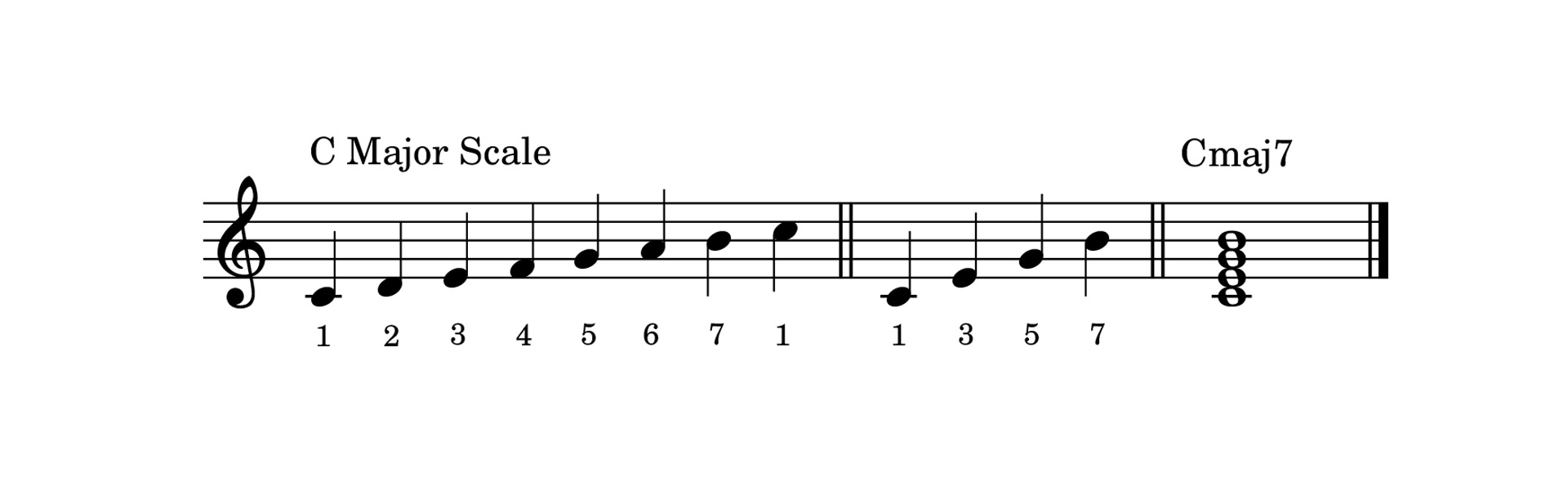
The same formula works in every major key.
This gives us a much more systematic way to understand and construct 7th chords, particularly when we encounter unfamiliar chord symbols on a lead sheet.
7th Chord Drill: Changing Chord Quality
Once we have our basic 1–3–5–7 major 7th shape, we can create different chord qualities by altering individual notes. Here we have the 5 most common and important 7th chords:
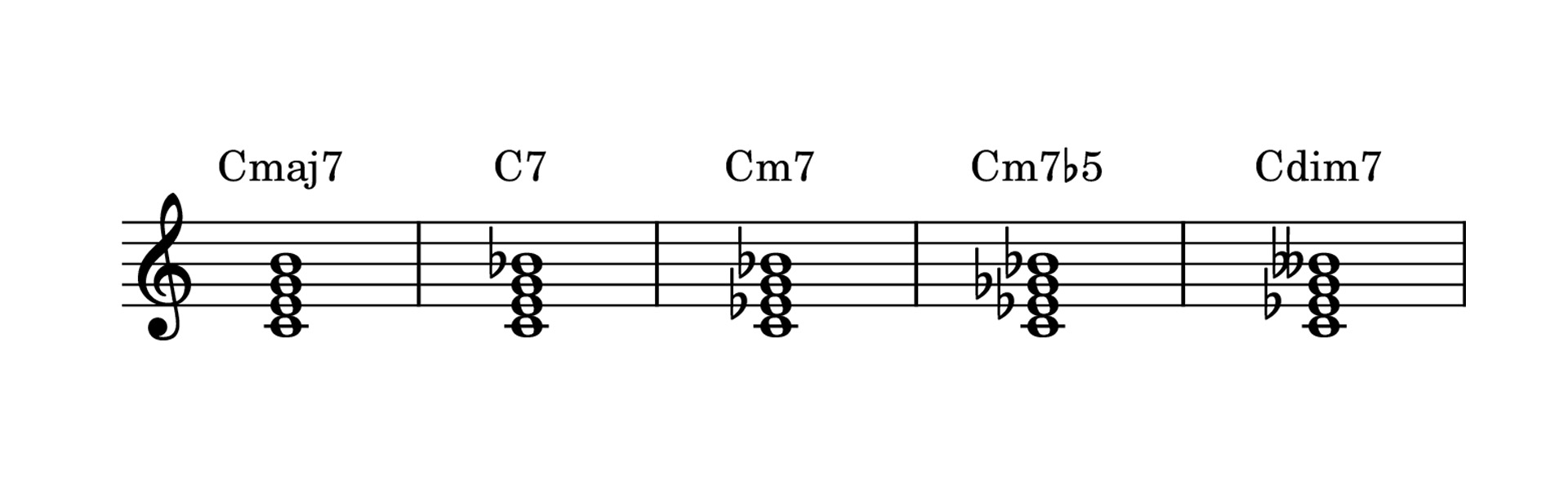
It’s very important to notice that only 1 note changes between these different types of C 7th chord. Therefore, once we can find our 12 major 7th chords, it’s a simple process to use this shape as a reference point to find the other types of 7th chords.
Here are the formulas to remember:
Major 7 → Dominant 7
Lower the 7th by a half step.
Major 7 → Minor 7
Lower the 3rd and 7th by a half step.
Minor 7 → Minor 7 Flat 5
Lower the 5th by a half step.
Minor 7 Flat 5 → Diminished 7
Lower the b7th by a half step.
This helps us see that these jazz chords are closely related structures, rather than completely different shapes that must each be memorised from scratch.
Apply The Chords To “Moon River”
Theory becomes much more useful when we apply it immediately to a real song.
In the first eight bars of Moon River, we encounter the following 5 7th chords: Cmaj7, Am7, Fmaj7, Bm7♭5, and E7.
We’ll use the major-scale method to construct each chord and then play the complete progression in the left hand.
Once the chords feel comfortable, we can add the melody above them and hear how the arrangement begins to sound richer and more harmonically complete than the simple triad version from lesson one.
Learn Chords Through Real Jazz Standards
It’s important to understand that you do not need to memorise all of the 7th chords before you start playing jazz piano.
A much more practical approach is to learn the chords that appear in the song(s) you are currently studying and gradually expand your harmonic vocabulary from there.
Think of it like learning a spoken language: rather than memorising an entire dictionary before having a conversation, we start with useful phrases that we can immediately put into practice.
That principle is central to the PianoGroove learning method.
In the next lesson we will learn how to transform these 7th chords into 2-handed spread voicings.
Related Lessons
A seventh chord is a triad which has been extended to include the 7th degree of the scale. This creates a fuller soun...
The triad is the basic building block for many different types of chords. The 4 types of triads are major, minor, dim...
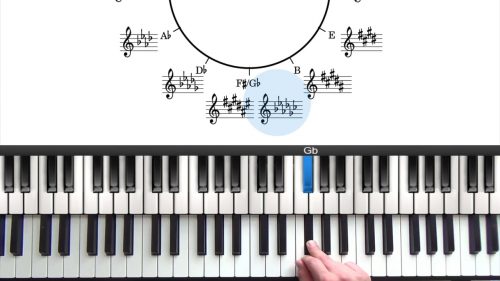
Scales provide the basis for understanding harmony. Learning and memorising the 12 major scales is the first step in ...
Practice Tips
-
Start with the major scale - If you're unsure how to build a chord, play the corresponding major scale first and identify 1–3–5–7.
-
Think in numbers as well as note names - Try to see a Cmaj7 not only as C–E–G–B, but also as 1–3–5–7. This makes the same formula transferable to every key.
-
Change one chord tone at a time - Practice moving from major 7 → dominant 7 → minor 7 → minor 7 flat 5 → diminished 7 so you can see how the shapes are related.
-
Focus on the “Moon River” chords first - Rather than trying to master every 7th chord in all 12 keys immediately, become comfortable with the chord roots that appear in the song and expand gradually.
- Say the chord names aloud - As you play each shape, say “C major 7,” “C dominant 7,” “C minor 7,” and so on. This helps connect the chord symbol, keyboard shape, and sound.

