


How To Read A Jazz Lead Sheet
Welcome to the first lesson in PianoGroove’s 7-Day Jazz Piano Jumpstart.
In this lesson, we explore the basic structure of a jazz piano lead sheet and you’ll learn how jazz pianists interpret the information it contains.
Unlike traditional sheet music, a jazz lead sheet does not tell us exactly what each hand should play. Instead, lead sheets only provide the melody and chord symbols, giving us the freedom to create our own arrangement.
Using the first eight bars of “Moon River”, we’ll start with the melody and simple triads before gradually developing a fuller jazz piano sound.
What Is A Jazz Lead Sheet?
A jazz lead sheet contains much less information than traditional piano sheet music.
Instead of showing separate treble and bass staves with every note written out, a lead sheet typically gives us the melody on a single staff, together with chord symbols written above it.
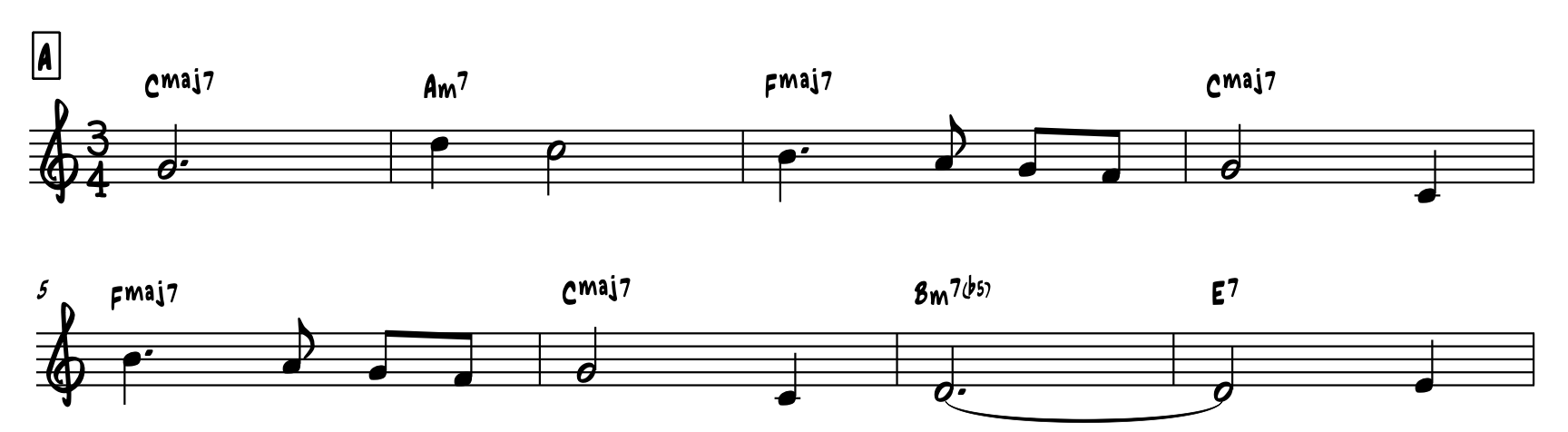
As jazz pianists, our job is to interpret that information and decide how to voice the chords, accompany the melody, and create our own arrangement.
This can feel unfamiliar at first, particularly if you come from a classical piano background, but it is also what gives jazz piano so much freedom and creativity.
Understanding The Melody & Chord Symbols
We begin by playing the melody of “Moon River” on its own.
Above the melody, the lead sheet shows chord symbols such as Cmaj7, Am7, and Fmaj7.
Rather than introducing the full 7th chords immediately, we simplify the harmony into basic triads:
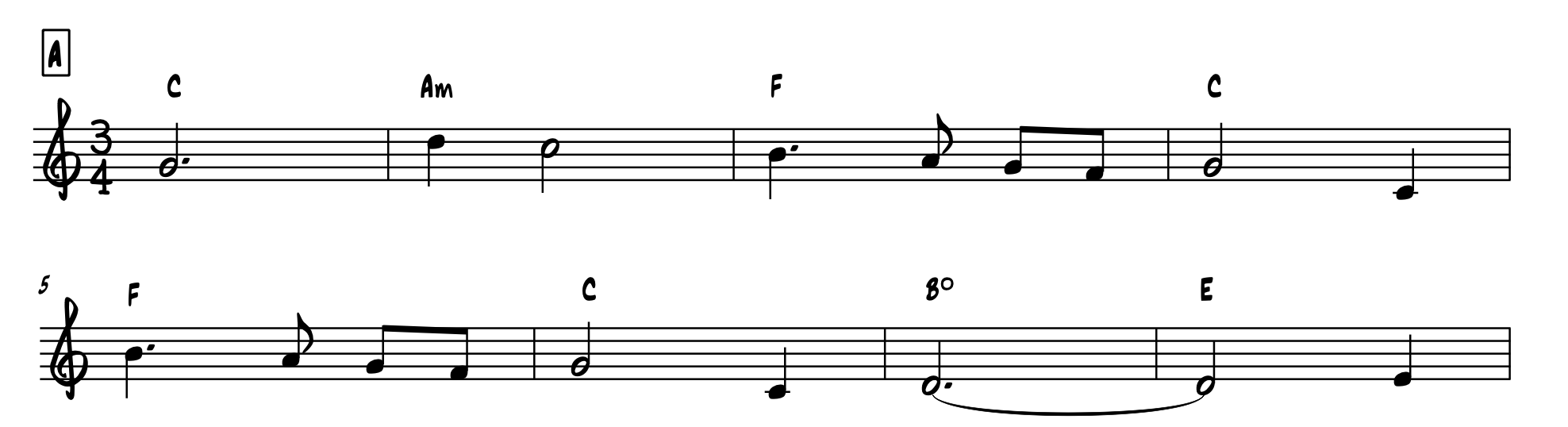
This makes it easier to understand the movement of the chords before adding more sophisticated jazz harmony later in the course.
Combining The Melody & Chords
Once the triads feel comfortable, we combine them with the melody. At this stage, the melody is played in the right hand while the basic chords are played in the left hand.
This already creates a recognisable arrangement of the tune, but it still lacks some of the richness and sophistication associated with jazz piano.
Over the coming lessons, we’ll gradually transform these basic chord shapes into more sophisticated jazz piano voicings.
Two-Handed Spread Voicings
The most important concept that we cover in this 7-Day Jazz Piano Jumpstart is two-handed spread voicing.
Instead of keeping the melody entirely in the right hand and the chord entirely in the left, we can distribute the chord tones between both hands:
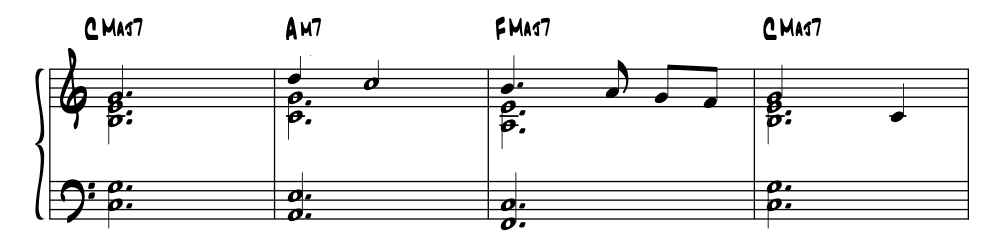
This creates a fuller, more balanced sound and it’s one of the fundamental techniques used to create beautiful solo jazz piano arrangements.
Related Lessons
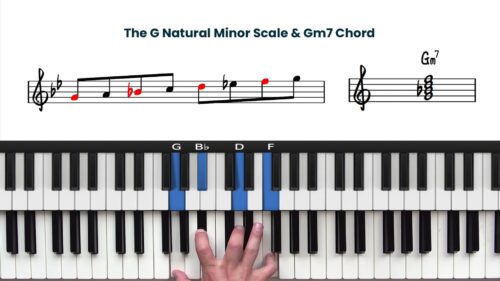
A seventh chord is a triad which has been extended to include the 7th degree of the scale. This creates a fuller soun...
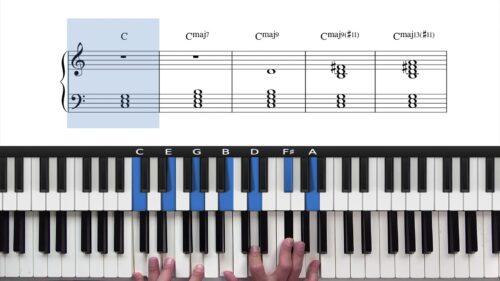
The triad is the basic building block for many different types of chords. The 4 types of triads are major, minor, dim...
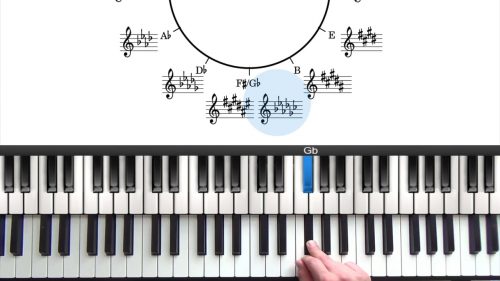
Scales provide the basis for understanding harmony. Learning and memorising the 12 major scales is the first step in ...
Practice Tips
-
Practice the melody on its own first - Make sure you can play the first eight bars comfortably before adding the chords underneath.
-
Learn the triads separately - Move through the chord sequence slowly until the shapes feel familiar, then begin combining them with the melody. This follows the progression in the lesson itself.
-
Count the 3/4 time out loud - Try counting “1, 2, 3” as you play so you become comfortable with the waltz feel of Moon River. We can also subdivide each beat and count "1 &, 2 &, 3 &".
-
Don’t worry about perfect fingering yet - At this stage, choose fingerings that feel comfortable. As your voicings become more sophisticated, your fingering will naturally become more flexible.
- Listen to the balance between melody and harmony - Even with simple triads, aim to keep the melody clear above the chords. As you progress through the course, you’ll start spreading the chord tones between both hands for a fuller sound.

