

Syllabus Overview
The Slow Blues Piano Syllabus combines two full courses designed to build a complete understanding of the slow blues sound. The first course introduces essential progressions, turnarounds, and soloing ideas, while the second expands into reharmonisation, gospel chord movement, and creative improvisation.
By following this pathway, you’ll learn how to internalise the 12-bar structure, create tension and release, and play sophisticated and professional solo piano piano.
This syllabus is ideal for beginners stepping into blues piano as well as intermediate players looking to develop sophistication and control in the slow blues style.
Learning Path
The Slow Blues Piano Learning Path takes you on a step-by-step journey through the expressive language of the blues. You’ll begin by mastering the 12-bar structure, classic voicings, and rhythmic phrasing that define the slow blues style.
As you progress, you’ll explore passing chords, gospel-inspired harmony, and tasteful improvisation. Each lesson builds on the last, helping you perform slow blues piano with confidence.
Slow Blues Foundations
We begin with the 12-bar blues form and the basic building blocks of slow blues piano. You’ll learn the core left-hand patterns, chord shapes, and rhythmic phrasing. You’ll discover how to combine melody and accompaniment to create gentle syncopation and establish a steady groove that feels relaxed yet full of emotion.
Blues Chords and Turnarounds
The next stage explores the essential harmony that powers the blues. You’ll study the use of extended chords, passing chords, and turnarounds to add movement and color to your slow blues piano playing. These lessons show how to connect chords smoothly across the 12-bar form, build classic endings, and play fills between phrases. You’ll start to hear how subtle changes in voicing can completely transform the mood of a performance.
Blues Fills & Embellishments
Lessons cover a wide range of techniques for adding fills and embellishments to respond to and completely your left hand bass lines and accompaniment. The goal is to develop natural 'call-and-response' phrasing and to use dynamics and space to bring your slow blues playing to life.
Harmony and Reharmonisation
In the 2nd course, you’ll move deeper into chord substitution. You’ll explore diatonic and chromatic reharmonisations, learning how to decorate the 12-bar form with passing chords, tritone substitutions, and gospel-inspired movements. The focus is on making your progressions sound rich and sophisticated while retaining the essence of the slow blues.
Gospel Changes & Advanced Progressions
Further developing on your harmonic understanding, you’ll explore gospel influences in the slow blues. Lessons introduce gospel-style progressions, walk-down sequences, and chromatic cadences that blend church harmony with blues performance. You’ll learn to apply these ideas within the 12-bar structure, creating arrangements that sound refined yet deeply soulful.
Improvisation and Expression
The final stage combines all previous concepts into expressive solo piano performance. You’ll learn to improvise using both chord tones and blues scales to develop your personal sound. The emphasis is on freedom and control to craft improvisations that breathe naturally and tell a musical story. By the end of this syllabus, you’ll have the skills and vocabulary to perform slow blues confidently and creatively.
Courses
The The Art Of Slow Blues Piano contains 2 courses which should be studied in the following order:
1. Slow Blues Piano For Beginners
2. C Slow Blues Harmony & Improv
Your Teachers

Hayden Hill
Hayden founded PianoGroove in 2015 with the goal of making the world a more musical place. He shares his love for jazz piano through his online courses and manages the community area of PianoGroove.
View Full Bio

Start Your Jazz Piano Journey Today
Try risk-free with our 100% money back guarantee
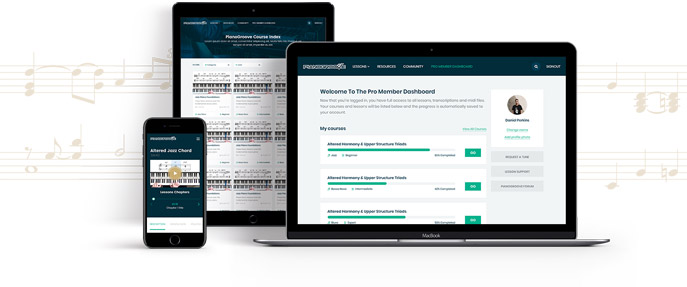
Syllabuses provide a structured path to work through the lessons and courses. Step-by-step guides for voicings, improv, hand independence, and much more.
Get Started NowStudent Reviews
It’s what our students say that really means something. We use Trustpilot because it tells us – and everyone else – exactly what real students think of our online school and community. These reviews tell us what our students love. What they love a little less. And where there’s room for us to improve. Read on to find out what PianoGroove’s students think of our service:

